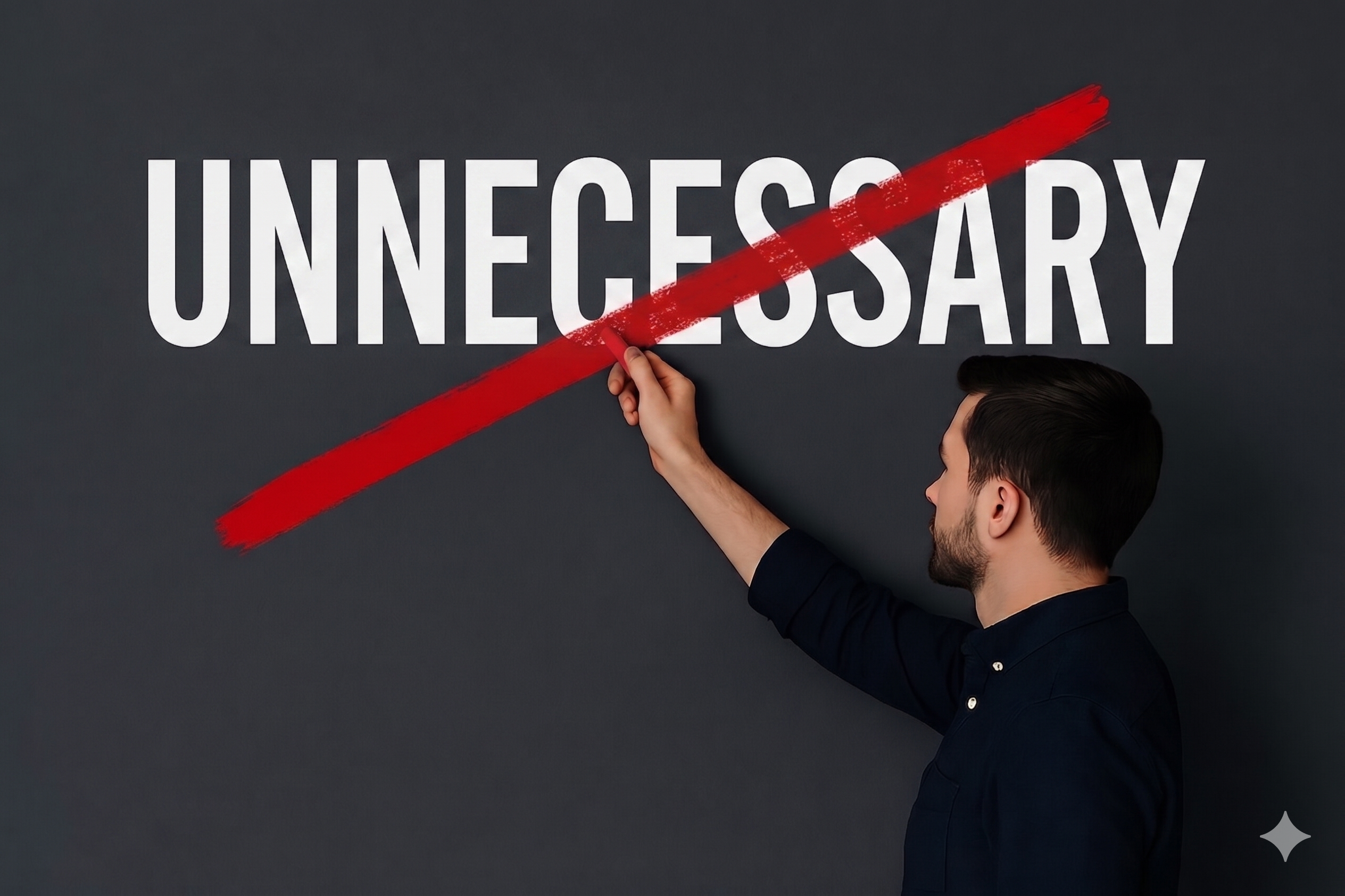
There’s one foundational principle in storytelling: nothing extra.
It doesn’t matter whether you’re writing a novel, a screenplay, or a short story — the rule is the same. Nothing belongs in your story that doesn’t move the plot. Not characters. Not events. Not even descriptions of the setting.
Few people consciously know this rule. But almost everyone feels it.
Classic example: a viewer skips through one of the subplots in their favorite show because it bores them. And here’s the interesting part — they don’t lose track of what’s happening in the main story. Even if the show has ten seasons.
The same thing happens with books. Sooner or later, the reader gives up on what’s empty — closes the book, sets it aside, or throws it out altogether.
Where the Instinct Comes From: Life Itself
It’s a completely natural reaction, and it comes not so much from intelligence as from how life actually works. There’s a plot without filler — and there’s a life without filler. Our entire path is essentially built on refusing endless possibilities in favor of one. We can’t be everywhere, and we don’t want to waste time on what we don’t need. So we choose one thing: what’s most useful, what’s most interesting.
Life as a Book
Life itself is a book — one we’re either writing or reading. The same kinds of things happen in it: events that matter, and events that change nothing. And we choose. Within reason, of course, but most of the time we’re the ones defining our own lives. Which means the skill of cutting out the unnecessary builds itself in us regardless of whether we ever learn to write.
“Let’s Just Add One More Character”
This is exactly why I won’t sign off on suggestions like: “Let’s add a character here — he’s such a cool one!”
The final word, of course, belongs to the client whose book we’re writing. But I push back. Sometimes hard.
Because if a character — however brilliant — affects nothing in the story, that character has no place in the book. Sure, you can build a new subplot around them, find justification, make it look beautiful. But what you’ll have is a different book. A different skeleton. Often without any new value.
A Book Without Padding
I understand perfectly well that at some point, adding becomes necessary. The author may think his book is excellent — a plot completely free of filler. But the publisher may find the word count too short. The project may require certain elements strengthened. Outside consultants may be too persuasive.
All of this triggers processes that aren’t always good for the book. But the starting point should always be the same: a book without filler. Without text added purely for length. Without compromises that destroy the story.
Not everyone works this way, unfortunately. And it isn’t because some people are good and others bad. The industry has real constraints, and someone is setting the tone — guided by more than just the question of whether the book is interesting and clean of clutter.
Size Matters
A film has to hit a certain runtime, or it won’t get distribution. A book has to hit a certain page count, or it won’t get printed.
This isn’t anyone’s conspiracy. It’s just how the market works. Want to sell? Adapt. Otherwise, your brilliant short story stays a file on your laptop.
Back to Life
I’d like to return to life one more time. As you can see, it has a lot in common with a book. Beyond creative work, we operate inside compromises and account for what other people want. That’s a perfectly normal story — but it should still carry your firm personal decision not to load yourself with more unnecessary weight than the situation actually requires.
You should still aim to make your own story without filler. Don’t worry — other people will bring you plenty.
Blog
Writing Services
29.04.2026